

Table of Contents
Er is geen twijfel dat het eten van fruit geweldig is voor uw gezondheid. Het is allemaal boordevol belangrijke vitamines, mineralen en antioxidanten, wat de belangrijkste reden is waarom het een essentieel onderdeel is van een gezond dieet voor mensen van alle leeftijden, van volwassenen tot baby’s. Denk gewoon terug aan uw schooltijd: uw lunchtrommel bevatte ongetwijfeld vaak een banaan, een mandarijn of een paar plakjes appel. Uw ouders wisten wat ze deden.
Zodra u ouder wordt, kunt u geïnteresseerd raken in het ontdekken welke specifieke voedingsstoffen al dat fruit eigenlijk bevat. Dat is precies waar we het vandaag in dit artikel over gaan hebben.Wat bevat fruit?
Zoals hierboven vermeld, is fruit een uitstekende bron van een verscheidenheid aan vitamines en mineralen, waarvan elk een onmisbare rol speelt in uw lichaam.
Wat meer is, het is algemeen bekend dat het een groot aantal antioxidanten bevat, die helpen om oxidatieve stress en vrije radicalen in het lichaam te bestrijden. Maar dat is nog niet alles. Fruit is doorgaans rijk aan voedingsvezels, wat een cruciale rol speelt bij de goede werking van onze darmen, en eigenlijk van ons gehele spijsverteringsstelsel. Vezels zijn ook onmisbaar voor de gezondheid van ons microbioom. Het draagt bij aan de verspreiding van gunstige bacteriën, die bijdragen aan de algemene gezondheid van het lichaam. Goed zorgen voor uw microbioom zal u belonen met gemakkelijker gewichtsverlies, een betere weerstand, minder ernstige allergische reacties, een betere geestelijke gezondheid en het helpen voorkomen van darmontstekingen. [1–3]Bovendien mogen we de fructose niet vergeten, die een uitstekende bron van energie is. En waar komt de sappigheid van fruit vandaan? Water, natuurlijk. Aardbeien bestaan bijvoorbeeld voor 90% uit water.
Dit betekent dat het eten van fruit uw vochtinname kan verhogen en zo bijdragen aan de optimale hydratatie van uw lichaam. optimale hydratatie. Daarnaast, dankzij de lage tot gemiddelde glycemische index van fruit (als gevolg van het hoge vezelgehalte, wat de opname van voedingsstoffen vertraagt), is de suiker in fruit niet iets om zich zorgen over te maken, zelfs niet voor mensen met diabetes. Dit betekent dat fruit, na overleg met een arts, een onderdeel van een gezond dieet kan zijn, zelfs voor mensen die aan deze aandoening lijden. [4]Wat zijn de voordelen van het regelmatig eten van fruit?
Hoewel het eten van fruit een groot voordeel is voor uw gezondheid, mag u niet verwachten dat u een onsterfelijke superheld wordt na het eten van een appel. Als u echter regelmatig fruit consumeert, zult u ongetwijfeld beginnen de gezondheidsvoordelen ervan op uw eigen lichaam te merken. [5–10]
Regelmatig fruit eten kan u helpen:
- uw spijsvertering te verbeteren
- chronische ziekten te vermijden
- het risico op hart- en vaatziekten te verlagen
- het risico op astma of diabetes te verlagen
- het risico op verschillende soorten kanker te verlagen
- gemakkelijk uw honger te stillen
- gewicht te verliezen
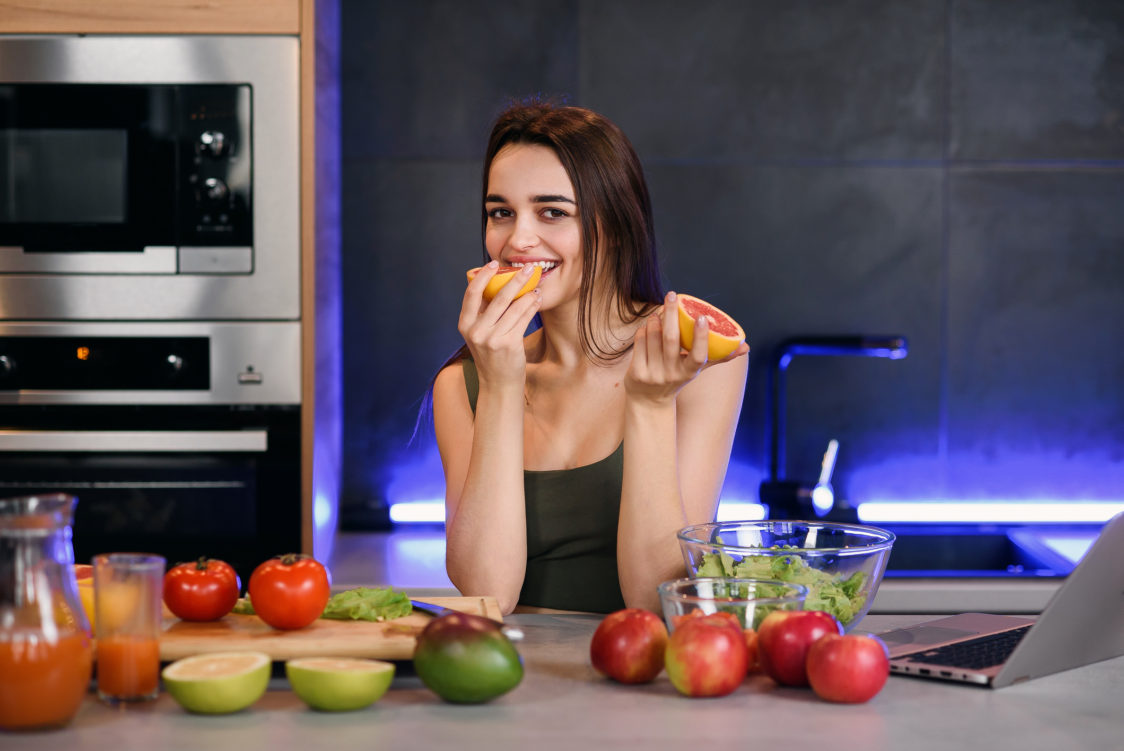
Hoeveel fruit moet je eten?
Wil je weten hoeveel fruit je zou moeten eten?
Algemene gezondheidsrichtlijnen raden aan om ongeveer 400 g groenten en 200 g fruit per dag te eten. Als u twee stukken fruit van gemiddelde grootte per dag eet, bereikt u deze hoeveelheid gemakkelijk. Resultaten van uitgebreid onderzoek suggereren dat om de maximale gezondheidsvoordelen te halen uit het eten van fruit en groenten, we tot 800 g per dag in totaal moeten consumeren. Het consumeren van zoveel fruit en groenten in een dieet is in verband gebracht met een effectieve preventie tegen cardiovasculaire ziekten. Zoals we weten, komen deze medische aandoeningen vaak voor bij mensen die last hebben van obesitas en overgewicht. Dit betekent dat u zich geen zorgen hoeft te maken over het eten van fruit, zelfs als u al een paar extra kilo’s heeft. [6] [11]U kunt zich gemakkelijk vaker dan twee stuks per dag trakteren op fruit, vooral als u een actieve atleet bent. Het eten van fruit hoeft u niet te vermijden, zelfs als u probeert af te vallen. Hoewel het waar is dat fruit een dosis simpele suikers bevat, bevat het ook een verscheidenheid aan fytochemicaliën, die anti-obesogene eigenschappen kunnen hebben. [6] [11]
Er zijn talloze manieren waarop u fruit kunt gebruiken om uw maaltijden te verrijken.
Voorbeeld: gepureerde bananen zijn ideaal om uw ontbijtpap te zoeten, en combineren perfect met pindakaas. Er is weinig zo simpel en bevredigend als een hap nemen van een verse appel of peer om de honger te stillen tijdens een drukke dag. Voeg die in plakjes toe aan een kom yoghurt, boordevol proteïne, samen met wat noten, en je hebt zojuist een evenwichtige en verzadigende snack bereid, met een goede dosis van alle macronutriënten.Misschien vraagt u zich af wat het beste moment van de dag is om fruit te eten. Het antwoord is heel simpel: op elk moment. Zelfs als fruit een snelle bron van energie is, betekent dit niet dat het direct wordt opgeslagen als vet, tenzij u direct daarna naar de sportschool gaat. Wat bepaalt of u gewicht toeneemt of verliest, is uw totale caloriebalans.
Als u een calorie-overschot heeft, zal uw overtollige energie-inname worden opgeslagen als vet, ongeacht of het afkomstig is van fruit, rijst, vlees of groenten. Dat betekent dat u zich geen zorgen hoeft te maken over het eten van fruit, zelfs laat in de middag of ’s avonds. U hoeft geen voedingsdeskundige te zijn om te weten dat een sinaasappel altijd beter is dan een zak chips, ongeacht het tijdstip van de dag.Dacht u dat het eten van fruit in de middag ervoor zorgt dat uw buik groter wordt?
Als dat het geval is, kunt u wellicht andere mythes verkennen in ons artikel dat aan dit onderwerp is gewijd: Mythes en feiten over fruit: Detoxificeert het uw lichaam en kunt u het ’s middags en ’s avonds eten tijdens het afvallen?
De vitamines en mineralen in fruit
Maar laten we nu eens kijken naar waar we hier eigenlijk voor zijn: de hoeveelheden calorieën, macronutriënten, vitamines en mineralen die in verschillende soorten fruit aanwezig zijn. Bij elk type fruit vermelden we alleen die mineralen en vitamines die relevant zijn in relatie tot de aanbevolen dagelijkse hoeveelheid. Alle waarden die hier vermeld staan zijn gemiddelden en dienen daarom slechts als een globale indicatie.
Verschillende soorten binnen een groep van vruchten kunnen verschillende waarden hebben, wat ook afhangt van de rijpheid van de betreffende vrucht.En we zullen het niet nalaten om de gezondheidsvoordelen en tips te noemen voor het bereiden van heerlijke gerechten met deze vruchten.
1. Appel
“Een appel per dag houdt de dokter weg” is een cliché dat u al vele malen heeft gehoord. Om zeker te zijn, het eten van appels garandeert niet dat u nooit meer gezondheidsproblemen zult ervaren. Een appel bevat echter zoveel gezonde voedingsstoffen, dat het echt een soort van beschermingsschild voor uw gezondheid is.
Voedingswaarde per 100 gram appel
Energie: 53 kcal
Koolhydraten: 11,4 g
waarvan suikers: 10,4 g
Proteïne: 0,3 g
Vetten: 0,2 g
Voedingsvezels: 2,4 g
Vitaminen in 100 gram appel
- vitamine C: 4,6 mg
- vitamine K: 2,2 mcg
- kleine hoeveelheden vitamine B6, vitamine B2, vitamine A, vitamine E, vitamine B1, vitamine B3, vitamine B9, vitamine B5
Mineralen in 100 gram appel
Wat maakt appels goed voor je?
Naast hun heerlijke smaak, vallen appels op door hun hoge gehalte aan antioxidanten, die helpen de cellen van je lichaam te beschermen tegen oxidatieve stress. Het zorgen voor een voldoende inname van antioxidanten kan je helpen chronische ziekten te vermijden en zelfs vroegtijdige veroudering van je lichaamscellen te voorkomen. [12–13]
Het eten van appels is gecorreleerd met een lager risico op het ontwikkelen van hartziekten. Dit kan, naast de aanwezige micronutriënten, te maken hebben met het hoge gehalte aan gezonde vezels, wat cruciaal is voor uw darmmicrobiom.
Zoals we al aangaven, kan dit een impact hebben op uw vermogen om af te vallen, uw immuunsysteem en uw mentale welzijn. Sommige studies suggereren bovendien dat het eten van een hele, gemiddeld-grote (166 g) appel per dag kan helpen om de ontwikkeling van kanker te voorkomen. Dit geldt met name voor kanker van de mondholte en het keelgebied, de slokdarm, de darmen en de larynx, evenals borst- of eierstokkanker. [12–13]Andere gezondheidsvoordelen van appels zijn verbonden aan hun hoge gehalte aan vitamines en mineralen. Het grootste voordeel van alle appels is hun uitzonderlijke gehalte aan vitamine C, wat bijdraagt aan de goede werking van het immuunsysteem, het zenuwstelsel en de mentale functies.
In addition, het is absoluut cruciaal voor ons bewegingsapparaat – zonder vitamine C, zou collageen, een onmisbaar onderdeel van alle bindweefsels, zich niet in het lichaam kunnen vormen. De appel bevat bovendien magnesium, wat helpt vermoeidheid en uitputting te verminderen, evenals vitamine K, die een invloed heeft op een correcte bloedstolling. [15]Atleten zullen met name zeker de rijke inhoud van kalium en magnesium waarderen. Deze mineralen dragen bij aan de goede werking van de spieren en het zenuwstelsel van het lichaam.
Het is dan ook niet verwonderlijk dat deze mineralen populair zijn onder degenen van ons die op zoek zijn naar manieren om de risico’s van spierkrampen te minimaliseren te verminderen. Appels bevatten echter niet zo’n grote hoeveelheid van deze stoffen als gespecialiseerde voedingssupplementen. Desondanks kan het eten ervan uw inname aanzienlijk verbeteren.Wat kunt u maken met appels?
Natuurlijk zijn er meer dan één soort appels. Het is waarschijnlijk dat zelfs uw lokale winkel een relatief breed assortiment aan appels aanbiedt, die verschillen in smaak en textuur, evenals hun gezondheidsvoordelen en voedingswaarde.
Gala appels zijn bijvoorbeeld erg zoet en geschikt om direct te eten of om fruitconserven te maken. De meer zurige Granny Smiths zijn ideaal om mee te bakken. Golden Delicious, daarentegen, hebben een bijzonder rijke smaak en bijna een romige consistentie. Hoe u al deze variëteiten gebruikt, is uiteraard uiteindelijk aan u. Voor wat extra inspiratie, voegen we een paar geweldige recepten met appels toe. [16]Probeer deze recepten met appels
- Zachte appeltaart met kaneel
- Appelpannenkoeken
- Overnight gefermenteerde havermout met fruit en noten
- Sappige appeltaart
- Sappige appeltaart met maanzaad
- Havertarta met appel en pindakaas
- Een eenvoudige appeltaart met roomkaas, noten en kaneel
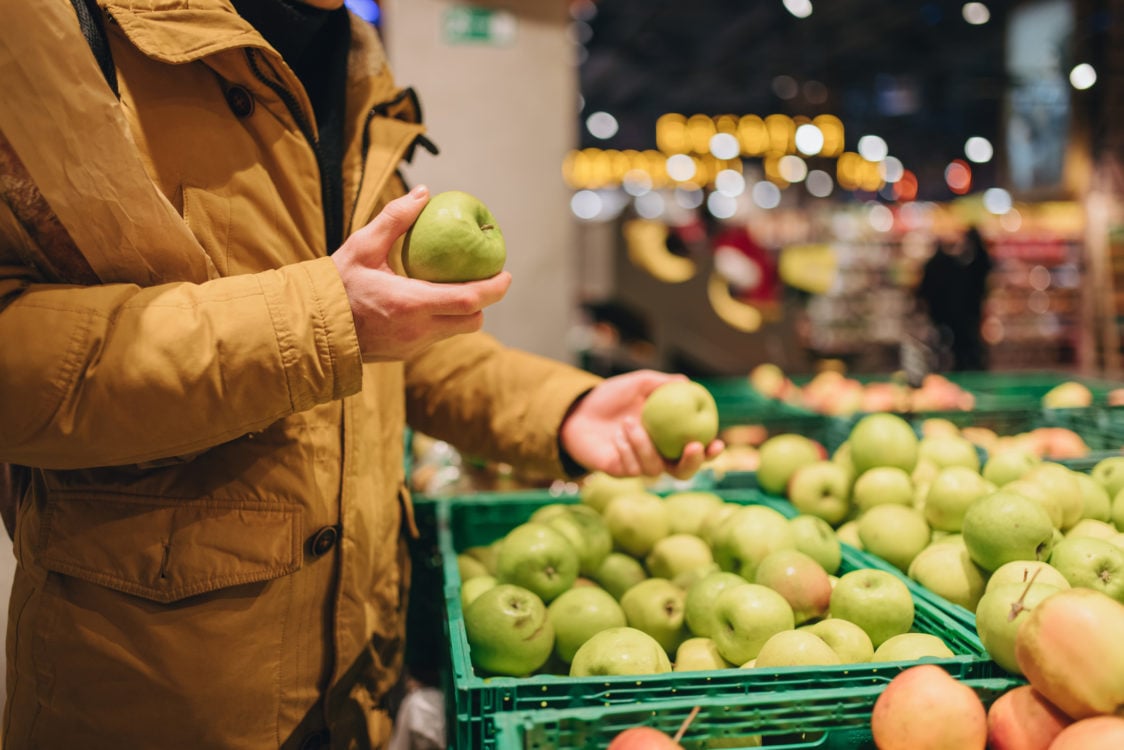
2. Peer
Perenbomen produceren vruchten die populair zijn vanwege hun heerlijk zoete vruchtvlees.
Afhankelijk van de variëteit, kunnen de oogst- en bewaartijden aanzienlijk verschillen. Peren vormen vaak een integraal onderdeel van veel gezonde taarten en andere desserts. Liefhebbers van kerst zullen ongetwijfeld de gekarameliseerde peren herkennen die op wintermarkten worden verkocht, als een onmisbaar onderdeel van de feestelijke sfeer.Voedingswaarde per 100 g peren
Energie: 58,3 kcal
Koolhydraten: 12,4 g
waarvan suikers: 9,8 g
Eiwitten: 0,4 g
Vetten: 0,1 g
Voedingsvezels: 3,1 g
Vitaminen in 100 g peer:
- vitamine C: 4,2 mg
- vitamine K: 4,5 mcg
- vitamine B9: 7 mcg
- kleine hoeveelheden: vitamine E, vitamine B1, vitamine B2, vitamine B3, vitamine B6
Mineralen in 100 g peer:
- koper: 0,1 mg
- kalium: 119 mg
- magnesium: 7 mg
- kleine hoeveelheden: mangaan, fosfor, ijzer, calcium en zink. [17]
Wat maakt peren gezond?
Peren kunnen zich ook beroepen op hun gehalte aan flavonoïden en antioxidanten, die het lichaam helpen bij het bestrijden van oxidatieve stress en mogelijk de veroudering van cellen vertragen. De antioxidantwerking is zelfs aangetoond bij peren die 8 maanden zijn bewaard, wat betekent dat u gemakkelijk een goede voorraad in uw voorraadkast kunt aanleggen. U kunt er wellicht ook verrast door zijn dat peren een positief effect kunnen hebben op hyperglykemie en hoge bloeddruk, die geassocieerd zijn met type 2 diabetes.
Finally, peren worden traditioneel gebruikt om een kater te verlichten na een drukke avond, evenals om hoest en zelfs constipatie te verlichten. [18–20]De actieve rol die peren kunnen spelen in de gezondheid van uw darmen is voornamelijk te danken aan de hoge hoeveelheid vezels, waarvan tot wel 71% onoplosbaar is, terwijl de overige 29% bestaat uit oplosbare vezels.
- Onoplosbare vezels vergroten het volume in de darmen en versnellen het spijsverteringsproces.
De positieve effecten van peren voor uw lichaam zijn ook te danken aan de rijkdom aan vitamines en mineralen. Zo heeft vitamine C een positieve invloed op uw immuunsysteem en de productie van collageen. We mogen echter niet vergeten de rol van koper, die invloed heeft op de energie-stofwisseling, de gezondheid van het bindweefsel, de werking van uw zenuwstelsel en extra bescherming biedt tegen oxidatieve stress.
Wat meer is, vrouwen zullen met name zeker de gunstige effecten van koper op de gezondheid van haar en huidpigmentatie waarderen. [15]Wat kunt u maken met peren?
Peren zijn, net als appels, buitengewoon veelzijdig in de keuken. Ze smaken heerlijk op zichzelf, of verwerkt tot sap of een smoothie.
U kunt ze gebruiken om uw havermout mee af te maken of ze verwerken in een heerlijk gebak. En wat dacht u van een smakelijke perencrumble? Vrijwel iedereen kan het maken met ons eenvoudige recept.
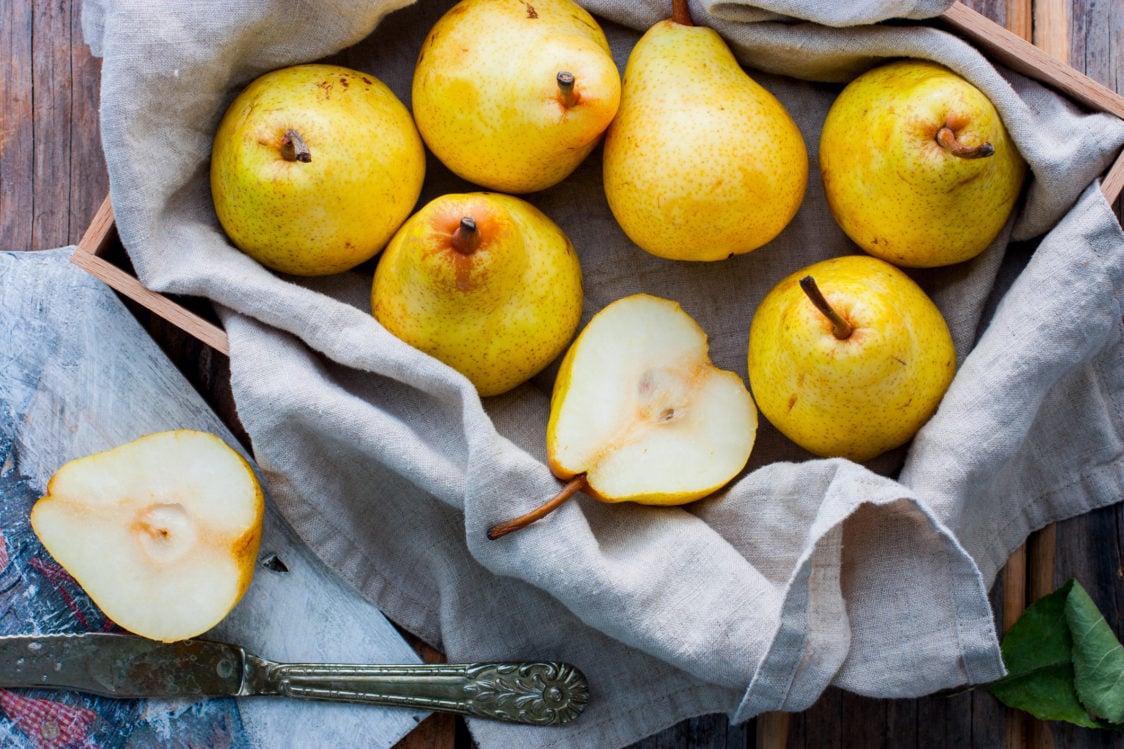
3. Banaan
Wie houdt er niet van de zoete smaak van banaan, die elk dessert naar een hoger niveau tilt?
En wacht maar tot je ontdekt dat bananen daadwerkelijk een rijke hoeveelheid belangrijke micronutriënten bevatten.Voedingswaarde per 100 g banaan
Energie: 93 kcal
Koolhydraten: 20,2 g
waarvan suikers: 12,2 g
Eiwitten: 1,1 g
Vetten: 0,3 g
Voedingsvezels: 2,6 g
Vitamines in 100 gram banaan:
- vitamine B6: 0,4 mg
- vitamine C: 8,7 mg
- vitamine B9: 20 mcg
- vitamine B2: 0,1 mg
- kleine hoeveelheden: vitamine B3, vitamine B5, vitamine B1
Mineralen in 100 gram banaan:
- mangaan: 0,3 mg
- kalium: 358 mg
- magnesium: 27 mg
- koper: 0,1 mg
- kleine hoeveelheden: fosfor, calcium, ijzer, zink en selenium [22]
Wat maakt bananen gezond?
Bananen bevatten veel bioactieve stoffen, zoals fenolen, carotenoïden, biogeneaminen of fytosterolen, die allemaal een groot aantal positieve effecten hebben op de gezondheid van uw lichaam. Vooral de bananenpuree is rijk aan ingrediënten met een hoog antioxidantpotentieel en anti-tumoractiviteit.
Het eten van bananen kan ook een positief effect hebben op het cholesterolgehalte in uw bloed. Bovendien zijn ze, dankzij hun hoge vezelgehalte, ook goed voor uw spijsverteringsstelsel. [23]Wat betreft mineralen, bananen staan bekend als een uitstekende bron van kalium. Studies tonen aan dat een verhoogde inname van dit belangrijke mineraal geassocieerd wordt met een lager risico op cardiovasculaire problemen en hersenbloedingen.
Daarnaast heeft kalium een positieve invloed op uw zenuwstelsel, spierfunctie en op het behouden van een normale bloeddruk. Mangaan, daarentegen, helpt cellen te beschermen tegen oxidatieve stress en verbetert de botgezondheid. En tot slot, als u op zoek bent naar een manier om uw immuunsysteem te versterken, zult u zeker een dosis vitamine C waarderen, en bananen leveren die ook in overvloed. [15] [24]Wat kunt u maken met bananen?
Banaan is een essentieel ingrediënt onder de beste tips voor gezonde ontbijtrecepten van veel fitness influencers, en zoals we allemaal weten, is het op zichzelf ook al heerlijk. Simpelweg wat cashewnotenboter erop smeren en genieten van de explosie van smaken.
Maar natuurlijk is het ook even nuttig bij het bakken of het bereiden van pannenkoeken, en bij vele andere zoete lekkernijen.Probeer deze heerlijke recepten met bananen
- Gezonde Mole Taart in een Glas
- Elephant Tear Cake met Chocolade, Banaan en Kwarkroom
- Banaan Havermout Pannenkoeken
- Omgekeerde Banaan Taart met Kokos
- Proteïne Donuts met Banaan en Chocoladesiroop
- Vegan Banaanbrood met Proteïne en Notenboter
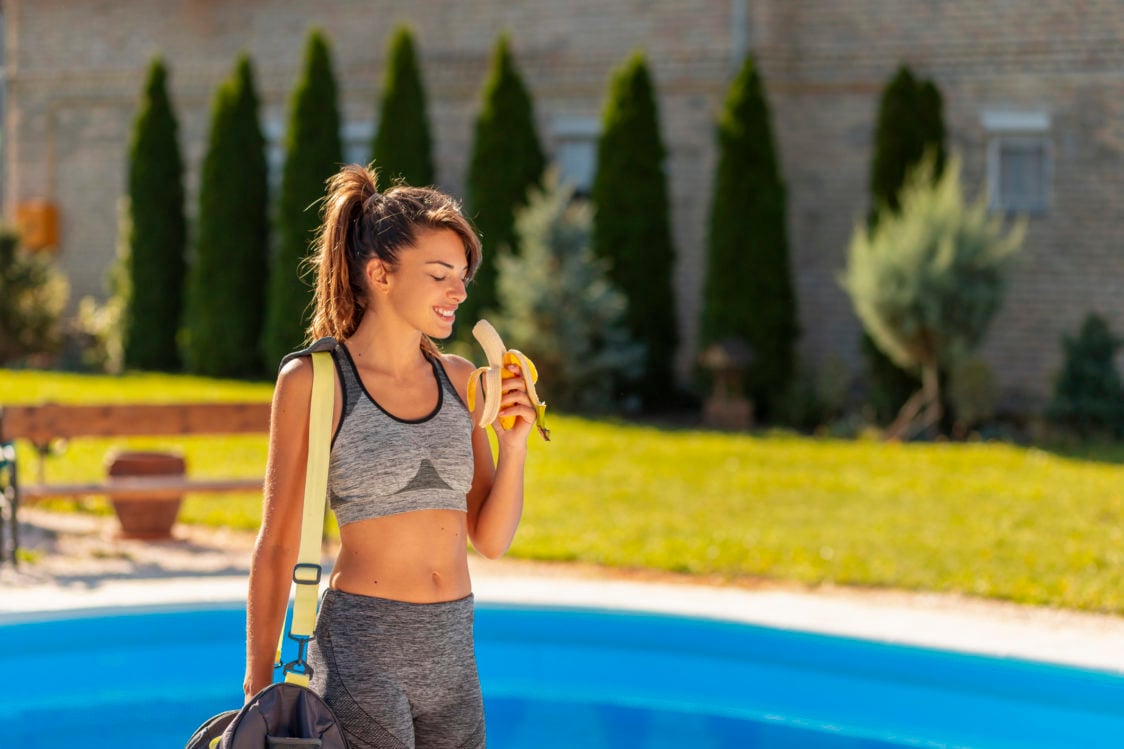
4. Bessen
Alle kleine bessen die je kunt plukken tijdens je wandeling in het bos, in je tuin, of die je kunt vinden in de schappen van je lokale supermarkt.
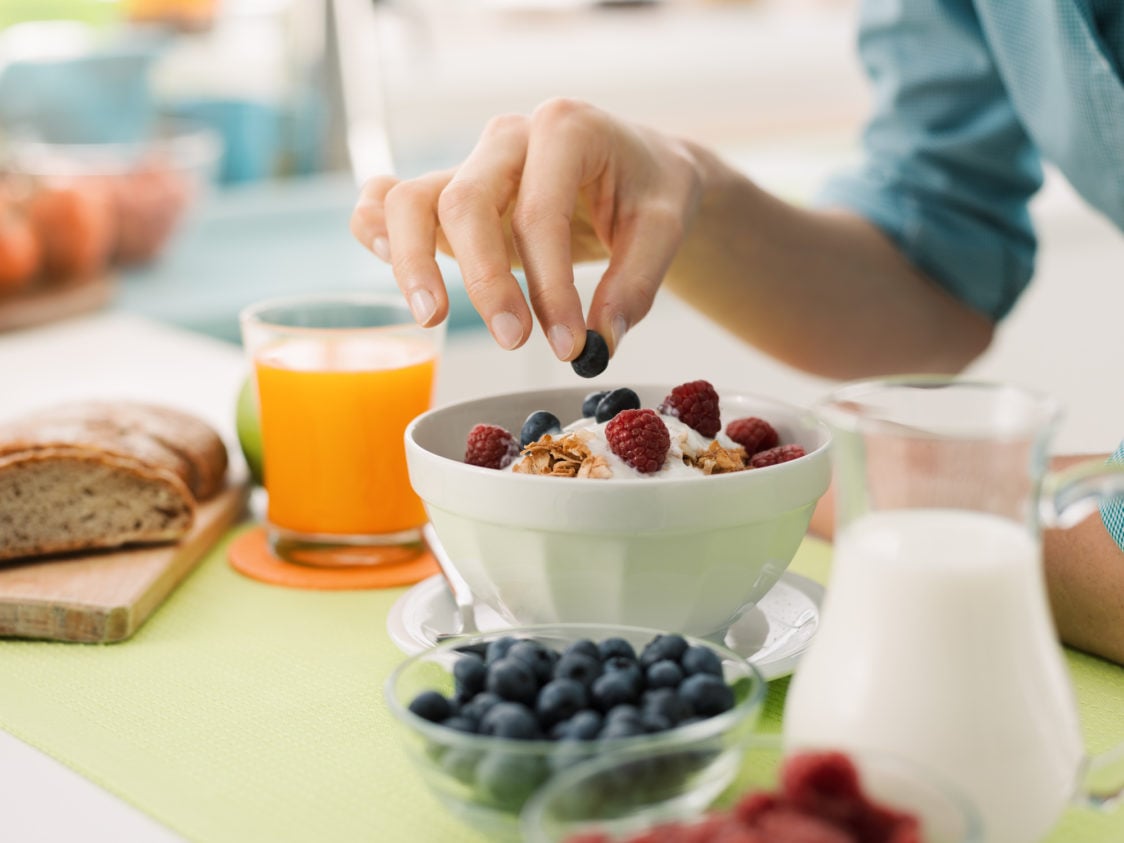
Berries zien er geweldig uit op uw desserts, smaken nog beter, en wat nog belangrijker is, ze zitten boordevol voedingsvezels en vele andere stoffen die uw gezondheid ten goede komen. Dat zijn meer dan genoeg redenen om er een onderdeel van uw dieet van te maken. So welke voedingsstoffen kunnen we vinden in aardbeien, bessen en blauwe bessen?Aardbeien
Voedingswaarden voor 100 g aardbeien
Energie: 32 kcal
Koolhydraten: 5,7 g
waarvan suikers: 4,9 g
Eiwitten: 0,7 g
Vetten: 0,3 g
Voedingsvezels: 2 g
Vitaminen in 100 g aardbeien
- vitamine C: 58,8 mg
- vitamine B9: 24 mcg
- vitamine K: 2,2 mcg
- kleine hoeveelheden: vitamine B6, vitamine B3, vitamine B1, vitamine E, vitamine B2, vitamine B5
Mineralen in 100 g aardbeien
- mangaan: 0,4 mg
- kalium: 153 mg
- magnesium: 13 mg
- kleine hoeveelheden: calcium, ijzer, fosfor en koper [25]
Blauwe bessen
Voedingswaarden voor 100 g blauwe bessen
Energie: 59 kcal
Koolhydraten: 12,1 g
waarvan suikers: 10 g
Eiwitten: 0,7 g
Vetten: 0,3 g
Voedingsvezels: 2,4 g
Vitamines in 100 g blauwe bessen
- vitamine K: 19,3 mcg
- vitamine C: 9,7 mg
- vitamine B6: 0,1 mg
- vitamine E: 0,6 mg
- kleine hoeveelheden: vitamine B1, vitamine B2, vitamine B3
Mineralen in 100 g blauwe bessen
- mangaan: 0,3 mg
- koper: 0,1 mg
- kalium: 77 mg
- ijzer: 0,3 mg
- kleine hoeveelheden: calcium, magnesium, fosfor en zink [26]
Frambozen
Voedingswaarden voor 100 g frambozen
Energie: 46 kcal
Koolhydraten: 5,4 g
waarvan suikers: 4,4 g
Eiwitten: 1,2 g
Vetten: 0,7 g
Voedingsvezels: 6,5 g
Vitaminen in 100 g frambozen
- vitamine C: 26,2 mg
- vitamine K: 7,8 mcg
- vitamine B9: 21 mcg
- vitamine E: 0,9 mg
- kleine hoeveelheden: vitamine B6, vitamine B5, vitamine B3
Mineralen in 100 g frambozen
- mangaan: 0,7 mg
- magnesium: 22 mg
- ijzer: 0,7 mg
- kalium: 151 mg
- koper: 0,1 mg
- kleine hoeveelheden: zink, fosfor, calcium [27]
Wat maakt aardbeien, frambozen en blauwe bessen gezond?
Al deze kleine bessen vallen op door hun uitzonderlijk hoge gehalte aan antioxidanten, die helpen oxidatieve stress in uw lichaam te verminderen. Dit is ook de reden waarom bessen vaak worden beschouwd als superfoods. Het waarborgen van een voldoende inname van deze zeer waardevolle stoffen kan de risico’s op het ontwikkelen van verschillende soorten kanker aanzienlijk verminderen.
Daarnaast bevatten ze een hoog gehalte aan vezels, wat zorgt voor een gezonde darmflora en, zoals we al weten, ons kan helpen af te vallen door een verzadigd gevoel te geven. [31–32]Onderzoek toont aan dat regelmatige consumptie van aardbeien ook een positief effect kan hebben op cholesterolwaarden. Blauwberries staan daarentegen bekend om hun anthocyanen en worden gebruikt om het geheugen te ondersteunen. Fenolzuren en flavonoïden, zoals anthocyanen, flavonolen en tannines, komen ook in overvloed voor in de meeste bessen. Deze stoffen bieden een breed scala aan gezondheidsvoordelen, zoals het voorkomen van ontstekingen en cardiovasculaire aandoeningen.
Er is geen twijfel dat bessen een integraal onderdeel van onze voeding zouden moeten zijn. [33–34] [41]Als u geïnteresseerd bent in een gezonde levensstijl, zult u zeker de rijke hoeveelheid vitamines en mineralen waarderen die in deze vruchten aanwezig zijn. Wilde bessen staan vooral bekend om hun hoge gehalte aan vitamine C, wat uw immuunsysteem ondersteunt, de juiste werking van uw geestelijke vermogens bevordert en helpt cellen te beschermen tegen oxidatieve stress. Bovendien bevat de voedingswaarde van bessen ook vitamine K, wat bijdraagt aan een goede bloedstolling en gezonde botten. Er is ook vitamine B9, die de groei van kiemweefsels tijdens de zwangerschap beïnvloedt, bijdraagt aan een goede bloedvorming, helpt bij de functies van de geestelijke vermogens, versterkt de immuniteit en helpt vermoeidheid en uitputting te verminderen. [15]
Wat betreft de mineralen, zijn bessen rijk aan kalium, onder andere. Kalium wordt vaak door sporters gezocht omdat het gunstig is voor de werking van het zenuwstelsel en de spieren. Het kan ook helpen bij het handhaven van een normale bloeddruk. Een andere belangrijke factor is mangaan, dat essentieel is voor de energie-stofwisseling, en tegelijkertijd helpt het cellen te beschermen tegen oxidatieve stress. [15]
Wat kunt u bereiden met bessen?
Of u ze nu puur eet, of ze gebruikt in een complexer gerecht, u kunt altijd vertrouwen op hun uitstekende smaak om uw maaltijd op te fleuren. Hier zijn een paar inspirerende recepten waarin bessen een onmisbaar ingrediënt zijn.
Probeer deze geweldige recepten met aardbeien, bosbessen en frambozen.
- Panna Cotta met kwark en bosbessen
- Zelfgemaakte aardbeienjam met chiazaad
- Een eenvoudige cake met aardbeien, gemaakt van havermeel
- Bevroren yoghurt met fruit, chocolade, granola en noten
- No-bake kwarktaart met frambozen
- Drie unieke manieren om zelfgemaakte ijsjes te maken
- Proteïnepudding met chiazaad en frambozen
5. Steenvruchten (pitvruchten)
Pluk, oogst & geniet.
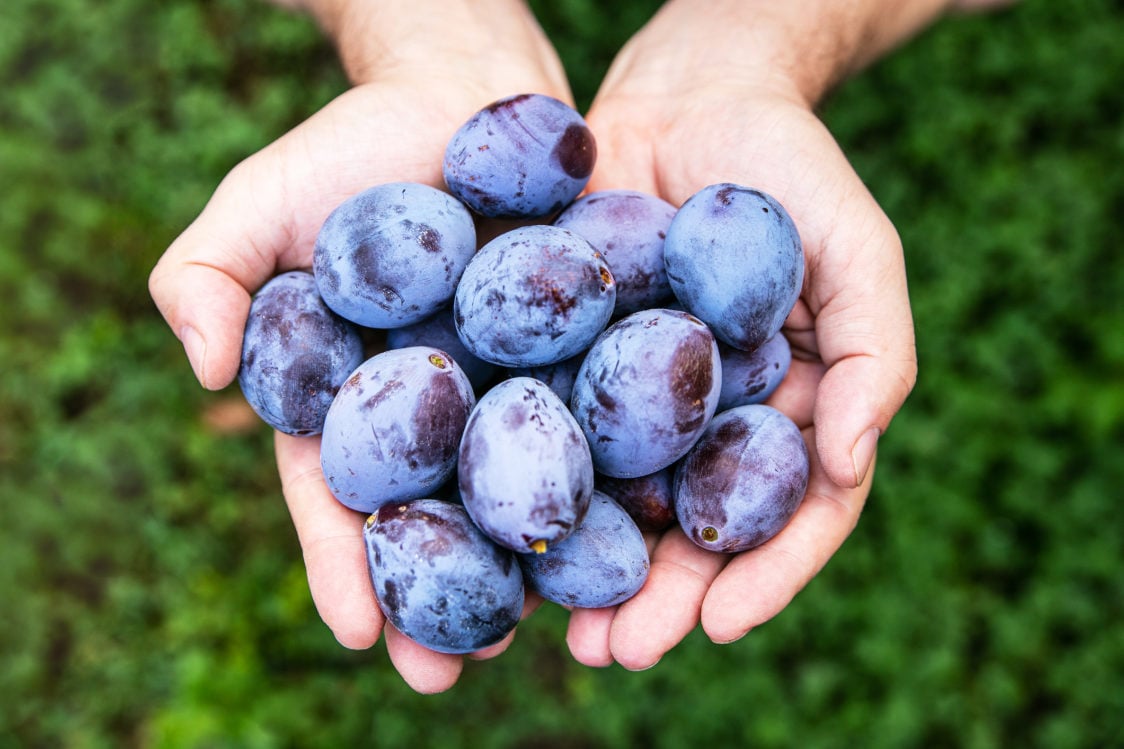
Ondanks dat ze niet veel op elkaar lijken, behoren abrikozen, kersen en pruimen allemaal tot dezelfde familie van steenvruchten. Ze verschillen allemaal in grootte, vorm en kleur. Laten we eens een kijkje nemen naar hun voedingswaarden.Kersen
Voedingswaarde voor 100 g kersen
Energie: 66 kcal
Koolhydraten: 13,9 g
waarvan suikers: 12,8 g
Proteïne: 1,1 g
Vetten: 0,2 g
Voedingsvezels: 2,1 g
Vitaminen in 100 g kersen
- vitamine C: 7 mg
- vitamine K: 2,1 mcg
- kleine hoeveelheden: vitamine B1, vitamine B2, vitamine B5, vitamine B6
Mineralen in 100 g kersen
- kalium: 222 mg
- mangaan: 0,1 mg
- koper: 0,1 mg
- magnesium: 11 mg
- kleine hoeveelheden: ijzer, fosfor, calcium [28]
Pruimen
Voedingswaarden voor 100 g pruimen
Energie: 48 kcal
Koolhydraten: 10 g
waarvan suikers: 9,9 g
Eiwitten: 0,7 g
Vetten: 0,3 g
Voedselvezels: 1,4 g
Vitamines in 100 g pruimen
- vitamine C: 9,5 mg
- vitamine K: 6,4 mcg
- vitamine A: 345 IE
- kleine hoeveelheden: vitamine B1, vitamine B2, vitamine B3
Mineralen in 100 g pruimen
- kalium: 157 mg
- koper: 0,1 mg
- mangaan: 0,1 mg
- kleine hoeveelheden: magnesium, fosfor [29]
Abrikozen
Voedingswaarden voor 100 g abrikozen
Energie: 50 kcal
Koolhydraten: 9,2 g
waarvan suikers: 9,2 g
Eiwitten: 1,4 g
Vetten: 0,4 g
Voedingsvezels: 2 g
Vitaminen in 100 g abrikozen
- vitamine A: 1926 IU
- vitamine C: 10 mg
- vitamine E: 0,9 mg
- vitamine K: 3,3 mcg
- kleine hoeveelheden: vitamine B1, vitamine B2, vitamine B3, vitamine B5, vitamine B6, vitamine B9
Mineralen in 100g abrikozen
- kalium: 259 mg
- koper: 0,1 mg
- mangaan: 0,1 mg
- kleine hoeveelheden: ijzer, magnesium, fosfor [30]
Wat maakt kersen, pruimen en abrikozen gezond?
De steenvruchten, net als al de andere vruchten waar we al over gesproken hebben, hebben opnieuw een hoge concentratie aan antioxidanten, die een belangrijke rol spelen in uw lichaam. Naast het verminderen van oxidatieve stress, kunnen ze helpen bij het voorkomen van hart- en vaatziekten, ontstekingen, en, in zekere mate, bepaalde soorten kanker. En zoals u weet, kan er nooit genoeg preventie zijn, dus het is geen verkeerde keuze om steenvruchten aan uw dieet toe te voegen.
[35–37]Pruimen kunnen een heel specifieke rol spelen in uw lichaam. Onderzoeken tonen aan dat ze kunnen **helpen de bloeddruk te verlagen en verstoppingen te voorkomen. In een vergelijkende studie bleken pruimen beter te presteren dan het populaire psyllium. Abrikozen kunnen ook aanzienlijke voordelen hebben voor uw spijsverteringsstelsel. Regelmatige consumptie kan leiden tot **verlichting van de symptomen van maagzuurbranden. Ze staan ook bekend om hun hoge gehalte aan bèta-carotine, een voorloper van vitamine A – een vitamine die onder andere essentieel is voor een gezonde huid. [38–40]
Steenvruchten bevatten ook een breed spectrum aan vitamines en mineralen. Net als bessen, zijn steenvruchten rijk aan vitamine A en vitamine K, wat cruciaal is voor een goede bloedstolling. Eenmaal, deze vruchten zijn ook rijk aan mangaan, kalium en koper, die allemaal onmisbaar zijn in veel lichaamsfuncties. Koper is bijvoorbeeld essentieel voor een goede werking van uw immuunsysteem, een gezonde pigmentatie van uw huid en haar, en speelt bovendien een cruciale rol bij het transporteren van ijzer door uw lichaam. [15]
Wat kunt u bereiden met steenvruchten?
Steenvruchten worden vaak gebruikt als ingrediënt in eenvoudige, luchtige taarten en cakes, die kenmerkend zijn voor de Centraal-Europese keuken. Ze zijn heerlijk als gezonde, gesneden snack en ook als ingrediënt in smoothies. Bekijk onze recepten voor inspiratie.
Probeer deze recepten met pruimen, abrikozen en kersen.
- Ontbijtpudding met pruimen
- Knapperige pruim crumble
- Verse abrikozenmuffel
- Taart met abrikozen en knapperige amandelen
- Geen-bak kokosnoot en abrikozen balletjes
- Clafoutis: Franse kersen taart
Belangrijkste punt
Zoals we kunnen zien, is fruit niet alleen populair dankzij de heerlijke zoete smaak. Het verdient zijn plaats in elk gezond dieet, onder andere dankzij het lage caloriegehalte in combinatie met de rijkdom aan vezels, antioxidanten, vitamines en mineralen. Daarom is het belangrijk om vaak fruit te eten, in gezonde hoeveelheden, en indien mogelijk met schil. Zo kunt u de gezondheidsvoordelen van het eten van fruit optimaal benutten.
Kent u iemand die fruit vermijdt? Als dat het geval is, zorg er dan voor dat u dit artikel met hen deelt. Misschien verandert u wel hun mening en laat u ze inzien welke heerlijke traktatie fruit kan zijn.
[1] Matthew R Hilimire et al. – Gefermenteerde voedingsmiddelen, neuroticisme en sociale angst: Een interactiemodel – https://pubmed.ncbi.nlm.nih.gov/25998000/
[2] Lieke WJ van den Elsen et al. – Het omarmen van de darmmicrobiota: de nieuwe frontier voor inflammatoire en infectueuze ziekten – https://www.ncbi.nlm.nih.gov/pmc/articles/PMC5292562/
[3] Els van Nood et al. – Duodale infusie van donormateriaal bij recidiverende Clostridium difficile – https://pubmed.ncbi.nlm.nih.gov/23323867/] 17 Vruchten met het hoogste watergehalte [https://www.myfooddata.com/articles/fruits-high-in-water.php
[4] Jeanelle Boyer et al. – Fytochemicalen in appels en hun gezondheidsvoordelen – https://link.springer.com/article/10.1186/1475-2891-3-5
[5] Dagfinn Aune et al. – Inname van fruit en groenten en het risico op cardiovasculaire ziekten, totale kanker en sterfte door alle oorzaken—een systematische review en dose-respons meta-analyse van prospectieve studies – https://academic.oup.com/ije/article/46/3/1029/3039477] Rui Hai Liu – Gezondheidsbevorderende componenten van fruit en groenten in de voeding [https://academic.oup.com/advances/article/4/3/384S/4591619
[6] Welke voedingsmiddelen vallen onder de categorie Fruit? – https://www.myplate.gov/eat-healthy/fruits
[7] Kimber L Stanhope – Suikerconsumptie, metabole aandoeningen en obesitas: De stand van de controverse – https://pubmed.ncbi.nlm.nih.gov/26376619/
[8] Joanne L. Slavin et al. – Gezondheidsvoordelen van fruit en groenten – https://academic.oup.com/advances/article/3/4/506/4591497] Satya P. Sharma et al. – Paradoxale effecten van fruit op obesitas [https://www.ncbi.nlm.nih.gov/pmc/articles/PMC5084020/
[9] Dianne A Hyson – Een uitgebreid overzicht van appels, appelcomponenten en hun relatie tot de menselijke gezondheid – https://pubmed.ncbi.nlm.nih.gov/22332082/
[10] Athanasios Koutsos et al. – Appels en cardiovasculaire gezondheid: speelt de darmflora een belangrijke rol? – https://pubmed.ncbi.nlm.nih.gov/26016654/] Appels, rauw, met schil [https://nutritiondata.self.com/facts/fruits-and-fruit-juices/1809/2
[11] Commissieverordening (EU) nr. 432/2012 van 16 mei 2012 houdende een lijst van toegestane gezondheidsclaims die op voedingsmiddelen worden gemaakt, met uitzondering van die welke betrekking hebben op het verminderen van het risico op ziekten en op de ontwikkeling en gezondheid van kinderen – http://data.europa.eu/eli/reg/2012/432/oj] 25 soorten appels, hun voordelen en de beste manier om van elke variëteit te genieten [https://www.prevention.com/food-nutrition/g20481875/apple-varieties-and-recipes/
[12] Peren, rauw – https://nutritiondata.self.com/facts/fruits-and-fruit-juices/2005/2
[13] Janice E. Maras et al. – Flavonoidinname in de Baltimore Longitudinal Study of Aging – https://www.ncbi.nlm.nih.gov/pmc/articles/PMC3251215/] DipayanSarkar De voedingsgerelateerde voordelen van Bartlett- en Starkrimson-peren voor het potentiële beheer van hyperglykemie, hypertensie en de bacterie Helicobacter pylori die maagzweren veroorzaakt, terwijl tegelijkertijd een gunstige reactie van probiotische bacteriën wordt ondersteund [https://www.sciencedirect.com/science/article/abs/pii/S0963996914007844?casa_token=_jDFH4s-XkAAAAAA:eoYhXCjNHAb7xNHLGJGJv1XPlpe22or8a0R9_Vb7QxOmVzVDFyqPiaW8y2Z67NynVei6x6Ky1Q
[14] Holly Reiland et al. – Systematisch overzicht van peren en gezondheid – https://www.ncbi.nlm.nih.gov/pmc/articles/PMC4657810/
[15] Vezels zijn essentieel voor onze gezondheid – https://www.vimcojim.cz/magazin/clanky/o-vyzive/Vlaknina-je-pro-nase-zdravi-nepostradatelna__s10010x10188.html
[16] Bananen, rauw – https://nutritiondata.self.com/facts/fruits-and-fruit-juices/1846/2
[17] BalwinderSingh et al. – Bioactieve stoffen in bananen en de bijbehorende gezondheidsvoordelen – Een overzicht – https://www.sciencedirect.com/science/article/abs/pii/S0308814616303831?casa_token=BLixLwzaC6kAAAAA:ZJfL5vQHbTajtkTK3WiC8jM7DLdbfklpX4xPKY6P3V3kDYW6t71EWmbJ3HJJR96NVZkhqEohnA
[18] Arjun Seth et al. – Kaliuminname en het risico op een beroerte bij vrouwen met en zonder hoge bloeddruk in de Women's Health Initiative – https://pubmed.ncbi.nlm.nih.gov/25190445/ ```html
[19] Strawberries, rauw – https://nutritiondata.self.com/facts/fruits-and-fruit-juices/2064/2
[20] Blauwe bessen, rauw – https://nutritiondata.self.com/facts/fruits-and-fruit-juices/1851/2
[21] Frambozen, rauw – https://nutritiondata.self.com/facts/fruits-and-fruit-juices/2053/2
[22] Kersen, zoet, rauw – https://nutritiondata.self.com/facts/fruits-and-fruit-juices/1867/2
[23] Pruimen, rauw – https://nutritiondata.self.com/facts/fruits-and-fruit-juices/2032/2
[24] ``` Apricots, rauw – https://nutritiondata.self.com/facts/fruits-and-fruit-juices/1827/2
[25] Carmen Rodríguez-García et al. – Plantaardige flavonoïden als chemopretende middelen tegen kanker: Een actuele review van studies bij mensen – https://pubmed.ncbi.nlm.nih.gov/31109072/
[26] N C Howarth et al. – Voedingsvezels en gewichtsregulatie – https://pubmed.ncbi.nlm.nih.gov/11396693/
[27] David J A Jenkins – Het effect van aardbeien in een dieet dat cholesterol verlaagt – https://pubmed.ncbi.nlm.nih.gov/19013285/] Sona Skrovankova et al. – Bioactieve stoffen en antioxidantenactiviteit in verschillende soorten bessen [https://pubmed.ncbi.nlm.nih.gov/26501271/
[28] Mauro Commisso et al. – Multi-aanpak metabolomica analyse en kunstmatig vereenvoudigde fytocomplexen onthullen een cultuur-afhankelijk synergie tussen polyfenolen en ascorbinezuur in de vruchten van de zoete kers (Prunus avium L.) – https://www.ncbi.nlm.nih.gov/pmc/articles/PMC5521804/
[29] Mirtha Navarro et al. – Karakterisering van polyfenolen en antioxidantenactiviteit van Malus domestica en Prunus domestica cultivars uit Costa Rica – https://pubmed.ncbi.nlm.nih.gov/29385709/
[30] Darshan S Kelley et al. – Een overzicht van de gezondheidsvoordelen van kersen – https://pubmed.ncbi.nlm.nih.gov/29562604/
[31] Talat Ahmed – Het gebruik van pruimen als controle bij hoge bloeddruk – https://pubmed.ncbi.nlm.nih.gov/21409897/
[32] E Lever et al. – Systematische review: het effect van pruimen op de darmfunctie – https://pubmed.ncbi.nlm.nih.gov/25109788/
[33] Takao Maekita – Japanse abrikozen verbeteren de symptomen van gastro-intestinale dysfunctie die geassocieerd is met gastro-oesofageale refluxziekte – https://www.ncbi.nlm.nih.gov/pmc/articles/PMC4499362/
[34] Bekijk de handleiding voor de Memory and Focus supplementen.
Add a comment